Anyanwu-Akeredolu Decries Absence Of WASH Facilities In Imo Schools
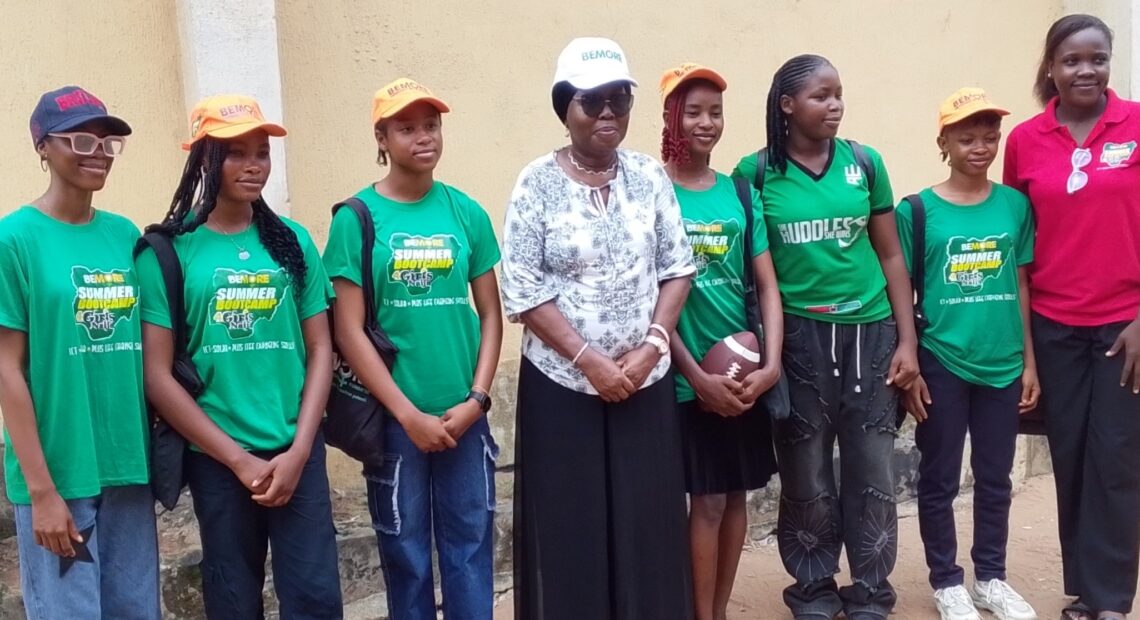
Dr. Betty Anyanwu-Akeredolu, the former First Lady of Ondo State and a candidate for the Labour Party in the 2027 House of Representatives election for the Owerri Federal Constituency, has expressed profound concern over the inadequate water and sanitation facilities in schools throughout Imo State.
Dr. Anyanwu-Akeredolu articulated these sentiments during her keynote address at the GEMS Cluster Mentorship Launch & Menstrual Hygiene Outreach, which took place on Wednesday, June 24, 2026, at Ikenegbu Girls Secondary School in Owerri, the capital of Imo State.
She lamented the persistence of such conditions in the state, deeming them unacceptable.
The former First Lady emphasized that the lack of functional toilets and a reliable water supply impacts all students, with adolescent girls bearing the brunt of the consequences.
She noted that many girls avoid attending school during their menstrual periods due to the inability to manage menstruation comfortably and privately in institutions lacking essential facilities.
She described menstrual health as a matter of human dignity and asserted that each school day missed due to menstruation represents a lost educational opportunity. Furthermore, she argued that a society has failed a girl who is compelled to choose between her education and her dignity.
Dr. Anyanwu-Akeredolu urged the Imo State Government, particularly its ministries of education and health, as well as local government authorities, development partners, school administrators, and community leaders, to prioritize the provision of water, sanitation, and hygiene (WASH) facilities in schools.
She stated that the provision of these facilities would keep girls in school, reduce absenteeism, and promote gender equity and educational outcomes.
As the founder of the Bemore Girls Empowered Foundation, Dr. Anyanwu-Akeredolu stated that the Bemore experience has demonstrated that deliberate investment in girls results in stronger families, communities, and nations.
She therefore called for a stronger commitment to creating a society where no girl is limited by her gender, deprived of opportunities, or denied the support she needs to achieve her full potential.
Additionally, Dr. Mrs. Ngozi Asonye from Alvan Ikoku Federal University of Education (AIFUE), Owerri, advised the students to set goals and strive to achieve them in order to attain success in life.
Dr. Asonye emphasized the importance of setting priorities, as not everything requires the same level of response.
According to her, success is not about doing everything perfectly but about excelling in one particular area.
She encouraged the students to manage their time effectively to ensure that daily tasks are completed.
She also advised the students to engage in sports and ensure they get adequate sleep for emotional balance.
While urging them to avoid procrastination, Dr. Asonye encouraged the students not to be discouraged by setbacks but to persevere and succeed in their endeavors.
Amarachi Ojimmah-Duba, founder of Pads for Her Initiative, highlighted that menstrual cycles vary among adolescent girls, noting that some experience theirs on the 28th day while others on the 30th day.
She advised those who experience deviations to consult medical professionals for evaluation and care. According to her, menstrual flow also differs among girls and women.
She noted that while some girls have a light flow requiring minimal changes of sanitary pads, others experience a heavy flow necessitating frequent changes.
Ojimmah-Duba stated that the duration of the flow typically ranges from three to five days, and any girl whose flow exceeds five days should seek medical advice.
She also highlighted that some girls miss school during their periods due to the lack of sanitary products, whose costs have surged by 150%, making them unaffordable for some girls and women, who resort to unsafe alternatives that pose health risks.
She regretted that schools in Nigeria lack basic WASH facilities and that fewer than 40% of schools have incorporated menstrual health management into their curricula.
Ojimmah-Duba revealed that menstrual-related infections contribute to 12% of reproductive health complications among adolescent girls in the country, attributing this to weak implementation, monitoring, and accountability mechanisms for existing programs and policies related to menstrual health and hygiene.
In her vote of thanks, a student of the school, Miss Okafor Francis Precious expressed gratitude to the organizations for launching the outreach at their school, describing it as highly impactful.
Sanitary pads were distributed to the students during the outreach.
The theme of the outreach was “Sports, Mentorship, Leadership, and Menstrual Health: A Holistic Approach to Developing the Girl-Child.”
The program was sponsored by Gridiron GEMS, Pads For Her Initiative, the Nigerian American Football Association, Browns Nigeria, and Bemore Girls Empowered Foundation.