Okigwe 2027: The Questions The People Must Ask Before They Vote

By Okonkwo Mathaias
Every election is presented as a contest between candidates. But beneath the posters, rallies, endorsements and political calculations lies a more important contest: the contest between ideas, capacity and expectations.
Beyond slogans, promises and political machinery, the people must interrogate the choices before them.
As Okigwe Zone approaches the 2027 senatorial election, the people will once again be confronted with competing promises and political narratives. There will be speeches about development, empowerment, representation and a better future. There will be familiar arguments about parties, structures, experience, connections and political loyalty.
But, perhaps, the most important thing Okigwe voters can do is to pause and ask questions: questions that help voters determine what kind of representation the zone actually needs.
The question should not simply be, “Who is the most popular?” It should be: “Who is most capable of turning the mandate of Okigwe people into meaningful value?”
That distinction matters.
WHAT HAS REPRESENTATION ACTUALLY DELIVERED?
That is the first straight question voters should ask. Elections should not be evaluated solely by the excitement they generate. They should ultimately be evaluated by outcomes.
Has representation improved opportunities? Has it attracted meaningful development? Has it strengthened the voice of the zone? Has it helped young people, women, businesses and communities connect to opportunities?
The people should demand evidence rather than rely entirely on political storytelling.
Projects, legislation, oversight, advocacy, constituency engagement and government interventions should all form part of the assessment.
A senator does not control every aspect of development. But a senator has a platform, influence and access that can be deployed strategically.
The important question is whether that influence is being converted into value for the people.
WHO CAN SPEAK FOR OKIGWE ZONE?
The National Assembly is not merely a meeting place. It is a centre of national decision-making where laws are made, policies are debated and national resources and priorities are discussed.
So, voters should ask: Who can effectively articulate Okigwe’s interests at that level?
Representation requires more than occupying a seat. It requires preparation, confidence, knowledge, communication and the ability to build productive relationships across political and institutional boundaries.
Okigwe needs a representative who can make a compelling case for the zone, not only when cameras are present, but also in committees, negotiations, policy discussions and engagements with government agencies and development partners.
The question is not whether a candidate can speak. It is whether the candidate can speak with substance, negotiate with competence and deliver with purpose.
DOES THE CANDIDATE HAVE A CLEAR VISION?
Another important question is: does the candidate have a clear vision of where he is going, or was he picked by godfathers and imposed on the people? If not, he could end up merely occupying a seat in the Red Chamber, watching as the goodies and opportunities meant for Okigwe Zone are picked off by other senators who are better prepared, more alert and more strategically.
A campaign without a clear agenda can easily become a popularity contest. Okigwe Zone deserves to hear more than general promises about development. A serious candidate should be able to explain the problems and present realistic pathways toward addressing them.
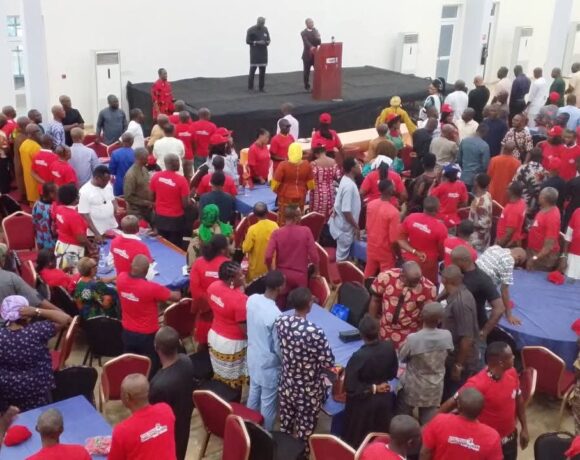
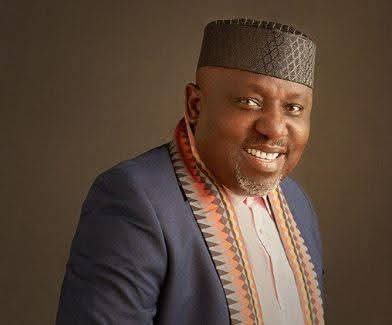
This is where Attorney Charles Onyirimba’s campaign has sought to distinguish itself by presenting representation as a vehicle for the transformation and renewed relevance of Okigwe Zone.
The candidates should be challenged to present ideas, not merely slogans.
CAN THE CANDIDATE ATTRACT OPPORTUNITIES TO OKIGWE?
Okigwe’s challenges cannot all be solved with constituency projects.
The zone needs investment, enterprise, skills, infrastructure, institutional attention and stronger connections to opportunities beyond its immediate geographical boundaries.
Therefore, voters should ask: Does this candidate have the capacity and networks to connect Okigwe to wider opportunities?
Leadership in today’s world requires the ability to build bridges to government institutions, businesses, development organisations, professional networks and the Diaspora. All these are like second nature to Attorney Charles Onyirimba.
Okigwe Zone has enormous human capital. Its sons and daughters are spread across Nigeria and around the world. Many possess expertise, businesses, capital and valuable connections.
The right representation should be able to help convert some of that human and social capital into development opportunities.
WHAT DOES THE CANDIDATE OFFER THE YOUNG?
Perhaps no question is more urgent.
A large proportion of Okigwe’s future lies in the hands of its young people. Yet many young people face unemployment, underemployment, limited access to capital, and inadequate opportunities to develop their talents, forcing them into social deviance.
Voters should ask every candidate: What is your practical plan for the youth?
Not just cash distributions. Not just campaign appointments.
What pathways will exist for skills development, entrepreneurship, education, technology, innovation and access to markets?
A responsible political system should not condition young people’s future on their loyalty to politicians.
The objective should be to create opportunities that allow young people to become economically independent.
That is a more sustainable form of empowerment.
WHAT ABOUT WOMEN?
Women are central to the economic and social life of Okigwe Zone, yet their political and economic potential is often underutilised.
Voters should, therefore, ask: How does each candidate intend to include women in the development process?
Representation should create opportunities for women in enterprise, skills acquisition, education, leadership and access to government programmes.
More importantly, women should not be viewed merely as campaign crowds or voting blocs.
They should be recognised as stakeholders, professionals, entrepreneurs, community leaders and partners in development.
The emergence of a woman as Director-General of the Onyirimba Campaign Council has itself generated discussion about the place of women in political organisation.
WILL THE REPRESENTATIVE BE ACCESSIBLE?
One of the most common complaints about political representation is that candidates are accessible before elections and difficult to reach afterwards.
That must change.
Voters should ask: What mechanism will keep the representative connected to the people?
Will there be regular consultations? Constituency engagement? Public reporting? Channels for communicating community concerns?
A senator cannot personally solve every problem. But a senator can maintain a functioning relationship with the people.
Accessibility is not a favour. It is part of representation.
WHAT IS THE CANDIDATE’S ATTITUDE TOWARD ACCOUNTABILITY?
This may be one of the most revealing questions of all.
Will the candidate be prepared to explain what was promised, what was achieved and what remains outstanding?
Accountability should not begin when allegations arise. It should be built into the culture of representation.
The people should expect periodic reports, meaningful engagement and honest communication.
A representative who can say, “This is what we promised; this is what we achieved; this is what we could not achieve and why,” demonstrates a healthier understanding of public service.
CAN OKIGWE AFFORD ANOTHER ELECTION BASED MAINLY ON MONEY?
This is, perhaps, an uncomfortable question.
Political money can influence an election, but it cannot build a sustainable future.
A temporary gift may solve a problem for a day. It cannot replace quality representation for four years.
The people must, therefore, distinguish between helping people in need and turning poverty into a political instrument.
The vote belongs to the voter.
It should not be sold, stolen, manipulated or intimidated out of the hands of the people.
If Okigwe wants a different political future, voters must be prepared to make choices based on competence, capacity, character and vision.
FINALLY: WHAT KIND OF OKIGWE DO WE WANT?
Perhaps, this is the ultimate question.
Do we want an Okigwe that merely complains about being marginalised, or one that strategically positions itself for relevance?
Do we want representation that simply occupies office, or representation that uses office to open doors?
Do we want temporary political gratification, or sustainable opportunity?
Do we want politics centred on personalities, or politics driven by ideas and measurable results?
The 2027 election will eventually produce a winner. But before that happens, Okigwe people have an opportunity to do something more important: define what they expect from the person they elect.
Attorney Charles Onyirimba’s campaign is built around the proposition that Okigwe can demand more from representation, that the zone can become more visible, more connected, more influential and more development-focused.
Whether voters embrace that proposition is ultimately their choice.
But the questions must be asked. And they must be answered honestly.
Because democracy is not merely about choosing who will occupy an office.
It is about deciding what that office should accomplish for the people.
Okonkwo Mathaias is a political analyst based in Owerri