Imo Electoral Commission Postpones Local Govt Elections Again, Citing Consultations
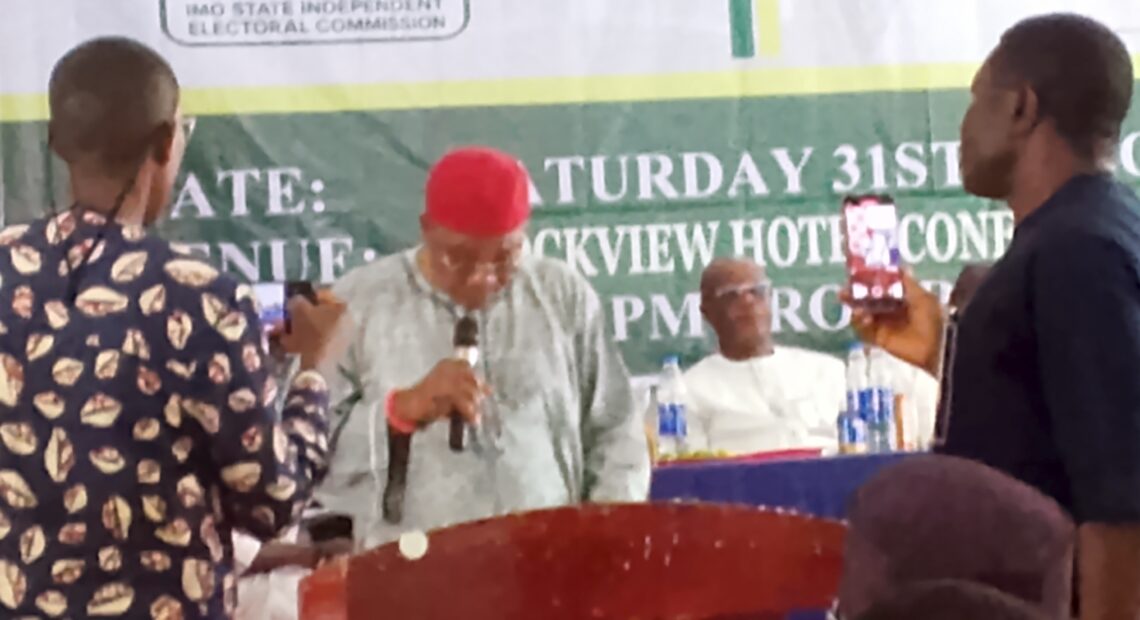
The Imo State Independent Electoral Commission (ISIEC) has once again postponed the 2026 Local Government Council election, cancelling the previously announced date of November 7. This decision follows extensive consultations with political parties and other key stakeholders.
Chief Charles Ejiogu, the Chairman of ISIEC, announced the postponement on Saturday, October 31, during a stakeholders’ meeting held at Rockview Hotels in Owerri. He indicated that the Commission felt compelled to delay the election after thorough discussions, particularly with the Inter-Party Advisory Council (IPAC), and assured that a new date, timetable, and guidelines would be provided promptly.
This latest postponement marks the second time the election has been rescheduled this year. Initially set for September 26, 2026, the election was postponed indefinitely due to legal challenges posed by opposition parties, including the All Progressives Grand Alliance (APGA) and the National Democratic Congress (NDC). The state government cited ongoing court proceedings as the reason for the initial delay, leading to the announcement of November 7 as the new date after consultations with IPAC and other stakeholders.
Ejiogu recounted the circumstances surrounding the electoral process, stating that ISIEC had begun preparations following its notification on September 18, 2025, which adhered to Section 7(1) of the 1999 Constitution, as amended, and relevant state laws. He explained that the Commission initially set September 26, 2026, for the election in light of the impending expiration of the two-year tenure of the 27 elected council chairpersons and councillors, who were elected on September 21, 2024, and sworn in on September 30, 2024.
According to Ejiogu, the original timetable faced opposition from some stakeholders, particularly IPAC, leading some members to seek judicial intervention for an extension of the electoral timeframe. Consequently, ISIEC engaged in constructive discussions with IPAC and other stakeholders, resulting in the postponement of the September 26 election to November 7. However, during the announcement of the latest decision, Ejiogu stated, “After extensive consultations, the Imo State Independent Electoral Commission is compelled to announce that the scheduled Local Government Council Elections on Saturday, November 7, 2026, will no longer take place.”
While the ISIEC chairman did not specify any new court orders or legal barriers causing the latest postponement, he emphasized that the stakeholders meeting was convened to allow stakeholders to voice their concerns and propose suggestions for rescheduling. He recognized IPAC, the umbrella organization for registered political parties, as a strategic partner in the electoral process, asserting that the Commission must engage with political parties and cannot operate in isolation.
Ejiogu reaffirmed the Commission’s impartiality, stating that ISIEC is not affiliated with any political party and is committed to providing a level playing field for all registered political parties, their supporters, and candidates. He assured aspirants for chairmanship and councillorship positions that all candidates emerging from party primaries would be afforded equal opportunities to participate in the election.
Regarding preparations for the rescheduled election, the chairman revealed that the exercise would encompass 4,758 polling units and 305 wards across the 27 local government areas of the state. He urged political parties to uphold internal democracy in candidate selection, noting that the Electoral Act 2022 mandates ISIEC to oversee political party primaries.
The Commission chairman also expressed concerns about security and the conduct of political campaigns, urging political parties and their supporters to respect differing opinions and to reject violence, thuggery, hate speech, and other anti-social behaviors. Ejiogu specifically cautioned against the destruction of opponents’ campaign materials and inciting statements that could disrupt public order.
He disclosed that ISIEC is collaborating with security agencies to establish an Inter-Agency Consultative Committee on Election Security (ICCES), which will include representatives from the Nigeria Police, Army, Navy, Air Force, Department of State Services (DSS), Nigeria Security and Civil Defence Corps (NSCDC), and other relevant agencies. He also called on IPAC and political parties to sign and adhere to a peace accord to ensure peaceful political activities before, during, and after the election.
Furthermore, the ISIEC chairman sought the support of traditional leaders, presidents-general, religious leaders, and women and youth organizations in mobilizing residents for the election, voicing concerns over voter apathy and the necessity to enhance grassroots democratic participation. He acknowledged the media’s role in the electoral process and called for ongoing cooperation in reporting the Commission’s activities.