Ohaji Nation Celebrates 2025 IriJi Festival Amidst Splendour
By GELE AGBAI
Before the advent of Western-educated colonial rulers and the introduction of white-collar jobs, agriculture was the predominant occupation for the inhabitants of the Southern Protectorate, which later merged with the Northern Protectorate to form modern-day Nigeria.
The discovery of crude oil in commercial quantities subsequently relegated farming to a secondary role, inciting increased demands for resource control. As a result, agrarian communities in Southern Nigeria abandoned farming as their primary occupation, transitioning to employment in industries introduced by the colonial rulers.
Among the crops cultivated in these communities, yam was considered the most prestigious. Prominent yam farmers were celebrated and often bestowed with the chieftaincy title of ezeji (king of yam).
These ezejis frequently had multiple wives and numerous children, as possessing a large barn of yams was historically a symbol of wealth.
This tradition persisted until the early 1970s when educated Nigerians began to emerge in significant numbers. Today, farming has been relegated to the background, as many individuals have chosen occupations other than agriculture.
The large yam barns have since vanished; however, yam continues to be celebrated in Eastern communities, even if sourced from other regions.
Ohaji Nation in Imo State is one such Eastern community that celebrates yam. Its name, Ohaji, signifies the community as the cradle and custodian of yam cultivation and production.
This was the case until its inhabitants embraced Western education and crude oil deposits were discovered in their vicinity.
As a result of their neglect of farming, the yam barns face extinction. Nevertheless, the community, like others in the Igbo homeland, continues to celebrate the New Yam (IriJi) festival with grandeur and splendor.
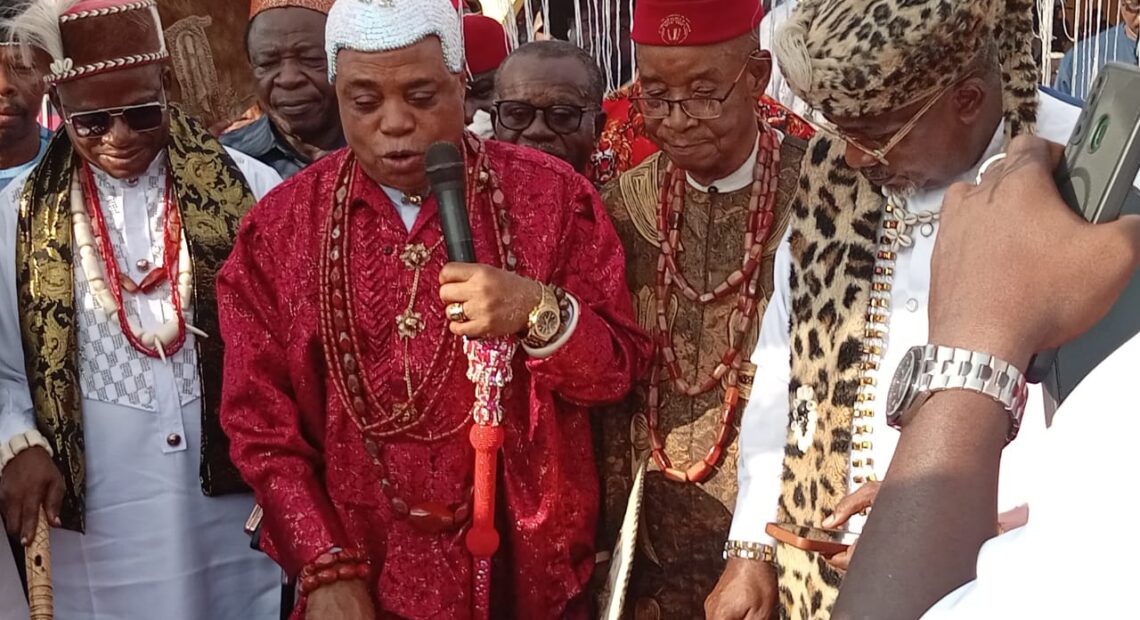
On Saturday, October 25, 2025, all roads led to the Ohaji District Headquarters at Umuokanne, where a dignitaries, dressed in their finest attires, convened to partake in the 2025 IriJi festival of the Ohaji Nation.
Dignitaries in attendance included the member representing Ohaji/Egbema/Oguta/Oru West Federal Constituency in the House of Representatives, Hon Eugene Okechukwu Dibiagwu, the member representing Ohaji Egbema Constituency in the Imo State House of Assembly, Hon Oscar Osuoha, Honorable Athan Ogo, Barrister Uche Nwosu, Chief Henry Onwukwe, who represented a prospective governorship candidate for 2027, Dr. Chima Matthew Amadi (Mazi Gburugburu), Dr. Peter Ukigwe, and Chief Ngozi Ogbu, a former Chairman of Okigwe Local Government Area, recently released from captivity by kidnappers.
Other attendees included Chief Gideon Nweze, a former Chairman of Oguta Local Government Area, Justice Chidi Ononogbo, Hon Goddy Esom Obodo, Nicholas Nwosu Tochukwu, President of the Ohaji Youth Congress, Goodluck Nwaneri of City Boys Movement funded by Nigeria’s first son, Seyi Tinubu, and Prince Obinna Chibuzor.
The traditional institution was represented by numerous traditional rulers, including HRH Eze Matthew Nwokoma, Eze Emmanuel Asso, Eze B. U Ihueze, Eze Chukwuemeka Okechukwu, Eze Ekezie, and Regent Prince Anselem Anyanwu.
In his remarks, the Chairman of the occasion, Dr. Greg Obi, emphasized the necessity for the community to return to farming. He highlighted that the Ohaji Nation possesses arable land that does not require fertilizer for a bountiful harvest of crops.
Obi lamented that the advent of crude oil has led the people to abandon farming, resulting in hunger within the region. He further noted that the government has been neglecting the community due to their disunity.
He expressed disappointment over the absence of government officials at the festival to encourage the community. His observation preceded the arrival of Honorable Dibiagwu and Honorable Oscar Osuoha, who received a warm welcome upon their arrival.
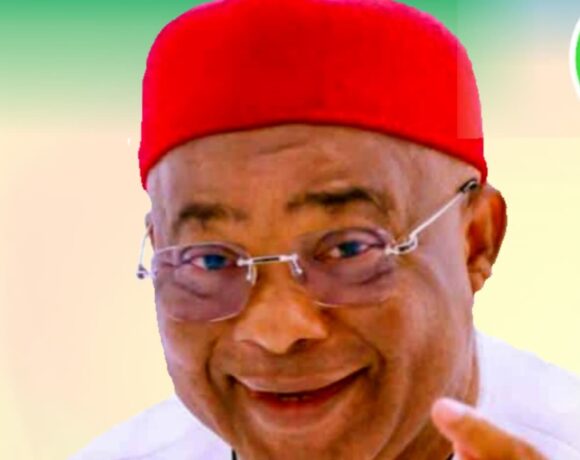
However, notably absent was the Special Guest of Honour, Senator Hope Uzodimma, Executive Governor of Imo State, who neither attended the ceremony nor sent a representative. The governor also failed to communicate any reasons for his absence.
In his welcome address, High Chief Fidelis Enyia, President-General of the Ogbako Ohaji People’s Forum, organizers of the festival, enumerated the forum’s achievements, including promoting sociocultural growth, fostering peace, and supporting the indigenes of the Ohaji Nation. According to Enyia, the forum has mediated several conflicts, supported the education of the community, and honored deserving indigenes.
Enyia outlined the challenges facing the Ohaji Nation, including youth unemployment and infrastructure deficits.
The President-General urged the indigenes of the Ohaji Nation to rededicate themselves and commit to the community’s growth.
Additionally, the Chairman of the Planning Committee, Barrister Golden Nwosu, asserted that IriJi Ohaji is significant as it represents the grand finale, the closing, and crowning celebration of all IriJi festivals across Imo State.
Nwosu, a former Commissioner in Imo State, explained that IriJi Ohaji serves as the grand finale because Ohaji is indisputably the cradle and custodian of yam cultivation and production.
Many insist that this was the case in ancient times. Speaker after speaker implored the indigenes to return to farming. Honorable Osuoha echoed Dr. Obi’s call for the Ohaji people to return to farming.
While slicing off a piece of the roasted giant yam tuber to mark the celebration, Honorable Osuoha appealed to the area’s youth to take advantage of the government’s policy encouraging Imolites to engage in farming to achieve food sufficiency in the state.
The 2025 IriJi Ohaji festival was undoubtedly grand and colorful. The communities comprising the Ohaji Nation were well-represented. Friends of the community also demonstrated solidarity through words and actions. However, the conspicuous absence of the Imo State Government aligned with Dr. Obi’s stance that the government has neglected the Ohaji Nation despite its contributions to the state’s upkeep.
The highlights of the festival included dance troupes and a wrestling competition, which was won by a bow-legged lanky wrestler who defeated a hefty opponent with a body mass comparable to that of a trailer.